
Close-up of elderly hands filling out a form with a silver pen on a wooden table.

Last Will and Testament Attorney in Virginia

Without a Will, Virginia Decides Who Gets Your Property

If you die without a valid will in Virginia, the Commonwealth’s intestacy statutes decide who inherits your property, not you. Those default rules under Virginia law don’t know your family situation, your wishes, or the person you’d actually want handling your affairs. AC Rieman Law drafts wills and powers of attorney for Virginia clients who want that decision to stay theirs.

    What Makes a Will Valid in Virginia

    A will is a signed document in which the testator, the person making the will, directs what happens to their property after death. Virginia requires a will to be in writing, signed by the testator, and signed by at least two competent witnesses who watched the testator sign, under Va. Code § 64.2-403. Any mentally competent adult, eighteen or older, can make one. Skip the witness requirement, or get it wrong, and a will that reflects exactly what someone wanted can still fail to hold up in probate.
    Handwritten wills, sometimes called holographic wills, are recognized in Virginia under narrower conditions, generally requiring the entire document to be in the testator’s own handwriting and proven by disinterested witnesses after death. They’re legally possible, but they’re also exactly the kind of document that invites a fight among heirs later, since there’s no attorney involved to confirm the testator’s intent was captured clearly. A properly drafted and witnessed will avoids that risk entirely.

    What a Complete Will Actually Addresses

    A will that just names beneficiaries and stops there is doing half the job. A complete will typically covers:

    Distribution of property: who gets what, including specific bequests and the residual estate
    Naming an executor: the person responsible for administering the estate through probate
    Guardianship designations, if there are minor children
    Contingent beneficiaries, in case a named beneficiary doesn’t survive the testator
    Specific bequests, for items or amounts that matter enough to name individually rather than fold into the general estate

    Leaving out contingent beneficiaries is a common gap. If a primary beneficiary predeceases the testator and no contingent beneficiary is named, that share can end up governed by intestacy rules anyway, even though the rest of the will is perfectly valid.

    What Happens Without a Will.

    Virginia’s intestacy statutes decide inheritance for anyone who dies without a valid will, and the results surprise a lot of people. A married person with children from the marriage generally has their estate split between their surviving spouse and children under a statutory formula, not left entirely to the spouse the way many people assume. An unmarried person with no children may see their estate pass to parents or siblings ahead of a long-term partner who was never legally married to them, regardless of how the relationship actually functioned. A blended family situation, where a surviving spouse and stepchildren are involved, often produces the most unexpected results of all, since stepchildren generally have no automatic inheritance rights under intestacy at all. None of these outcomes reflect what most people would actually choose, which is exactly why a will matters even for someone who assumes their situation is simple.
    The Probate Process a Will Sets in Motion.

    A will doesn’t avoid probate. It directs how probate works once it happens. The named executor petitions the Circuit Court to be qualified, the will is admitted to record, and the executor then administers the estate: paying debts, filing an inventory, and eventually distributing what remains to beneficiaries. A clear, properly executed will makes this process faster and cheaper, since the court isn’t sorting out ambiguous instructions or fielding disputes between potential heirs. A poorly drafted will, or no will at all, can turn a straightforward estate into a drawn-out and expensive probate proceeding.

    Power of Attorney: Who Acts for You If You Can’t

    A power of attorney grants someone else, your agent, the authority to act on your behalf during your lifetime if you become unavailable or incapacitated. Unlike a will, which only takes effect after death, a power of attorney matters most while you’re still alive but unable to manage your own affairs. Choosing that person carelessly, or not choosing one at all, leaves decisions about your finances or your care in the hands of whoever a court appoints instead.

    The Different Types, and What Each Actually Covers

    Limited power of attorney: authorizes the agent to act on your behalf for specific, defined functions, often financial or investment-related, and nothing beyond that scope
    Durable power of attorney: remains in effect even if you become incapacitated, and can be structured to cover financial and personal matters broadly
    Medical power of attorney: takes effect only once a physician determines you’re incapable of making your own medical decisions, at which point your named agent can make those decisions on your behalf

    These aren’t interchangeable, and picking the wrong one, or assuming a general power of attorney automatically covers medical decisions, is a mistake that surfaces at the worst possible time: during a medical crisis, when there’s no time to fix the paperwork.

    Should You Also Consider a Trust?

    A will isn’t the only estate planning tool worth discussing, and for some clients it isn’t the only one that makes sense. A revocable living trust allows assets to pass to beneficiaries without going through probate at all, which can save time and reduce court involvement, particularly for someone who owns real estate in multiple states or wants more privacy than a public probate proceeding allows. A trust isn’t automatically better than a will. It comes with its own setup and maintenance requirements, including the step of actually transferring assets into the trust’s name, a step people frequently forget, which renders the trust far less useful than intended. AC Rieman Law can walk through whether a trust makes sense alongside your will, rather than assuming one approach fits everyone.

    Digital Assets Are Easy to Overlook

    Estate planning documents drafted even a decade ago rarely addressed digital assets, and a lot of older wills still don’t. Email accounts, cryptocurrency, online banking access, and social media accounts all raise questions a traditional will may not answer clearly: who has authority to access them, and what should happen to them. Virginia has adopted a version of the Uniform Fiduciary Access to Digital Assets Act, which gives executors a legal framework for accessing digital accounts, but that framework works best when the will or a separate document actually grants that authority explicitly rather than leaving an executor to figure it out after the fact.

    When to Update a Will or Power of Attorney

    Estate documents aren’t meant to be signed once and forgotten. A divorce, a remarriage, the birth of a child, the death of a named executor or agent, or a significant change in assets are all reasons to revisit an existing will or power of attorney. Virginia law generally revokes provisions favoring a former spouse automatically upon divorce, but relying on that default rather than updating the document directly leaves room for confusion about what the will actually says versus what the law overrides.

    Why Work With AC Rieman Law

    Attorney Amanda (“AC”) Rieman Sarago built her practice around the belief that legal services shouldn’t be out of reach because of cost. That approach carries directly into estate planning: clear drafting, direct communication, and documents built around your actual situation rather than a boilerplate template pulled off the internet.

    Wills drafted to Virginia’s exact execution standards, avoiding the witness and formatting mistakes that create probate disputes
    Power of attorney documents matched to your actual needs, not a one-size-fits-all form
    Direct access to Amanda Rieman throughout drafting and execution
    Affordable, straightforward fee conversations before any drafting begins

    Serving Central and Northern Virginia

    AC Rieman Law offers will and power of attorney drafting services to residents of Culpeper, Charlottesville, Front Royal, Manassas, Fredericksburg, Fauquier County, and the surrounding areas. Don’t wait until a crisis forces the issue. Reach out today to get the process started.
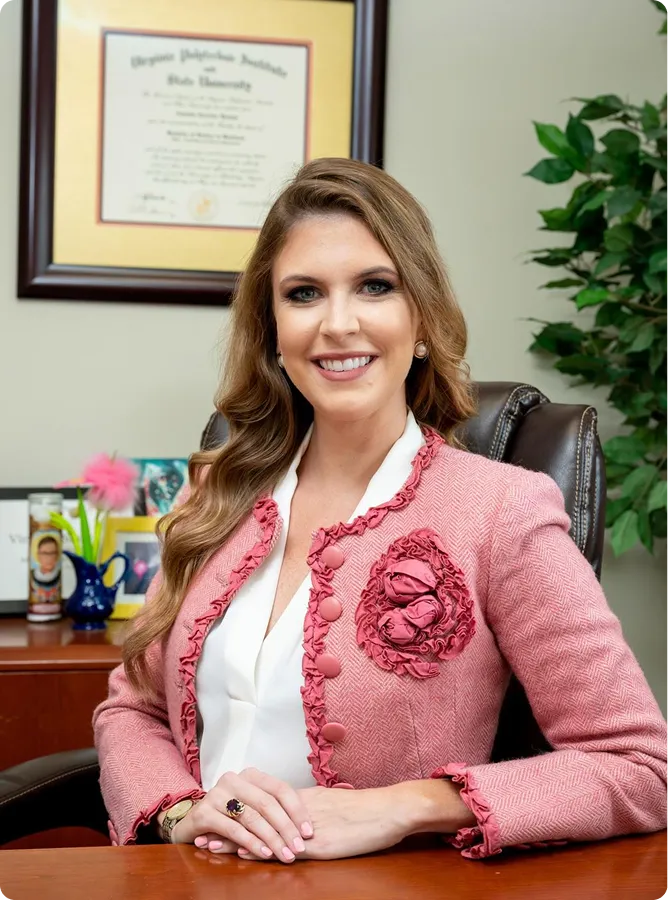
    Professional woman with long wavy hair wearing pink jacket, seated at desk with diploma and plant in background.